
What is SEO & Why It Matters: The Complete Guide to Search Engine Optimization in the AI Era
What is SEO and Why It Matters Today
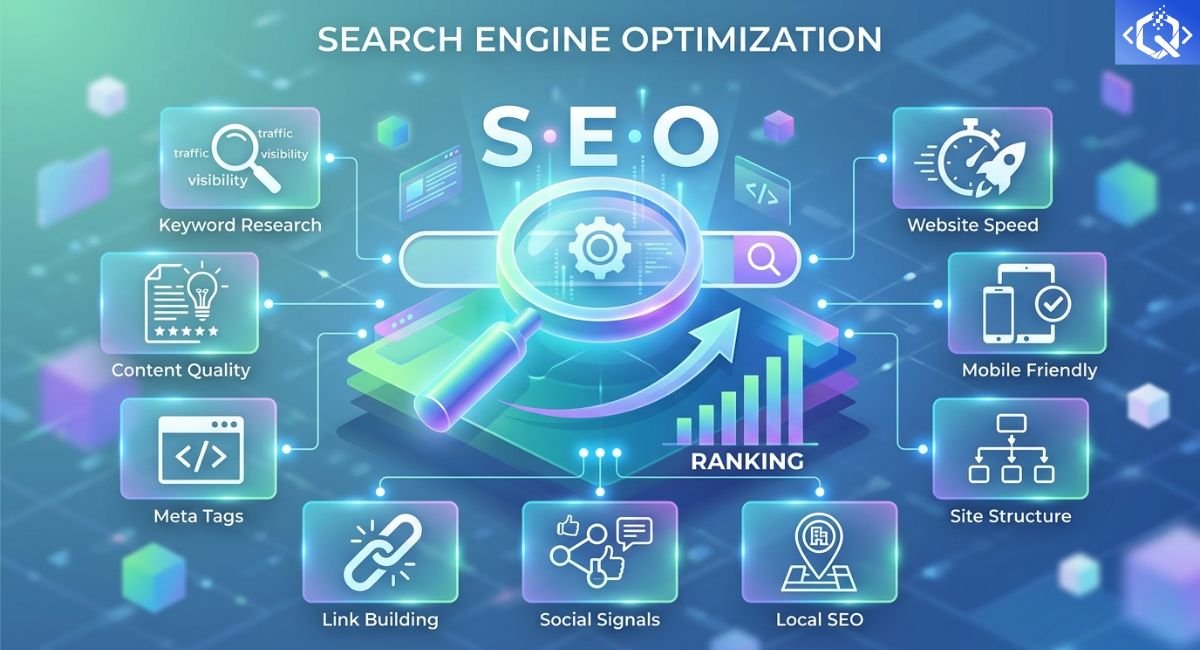
What is SEO
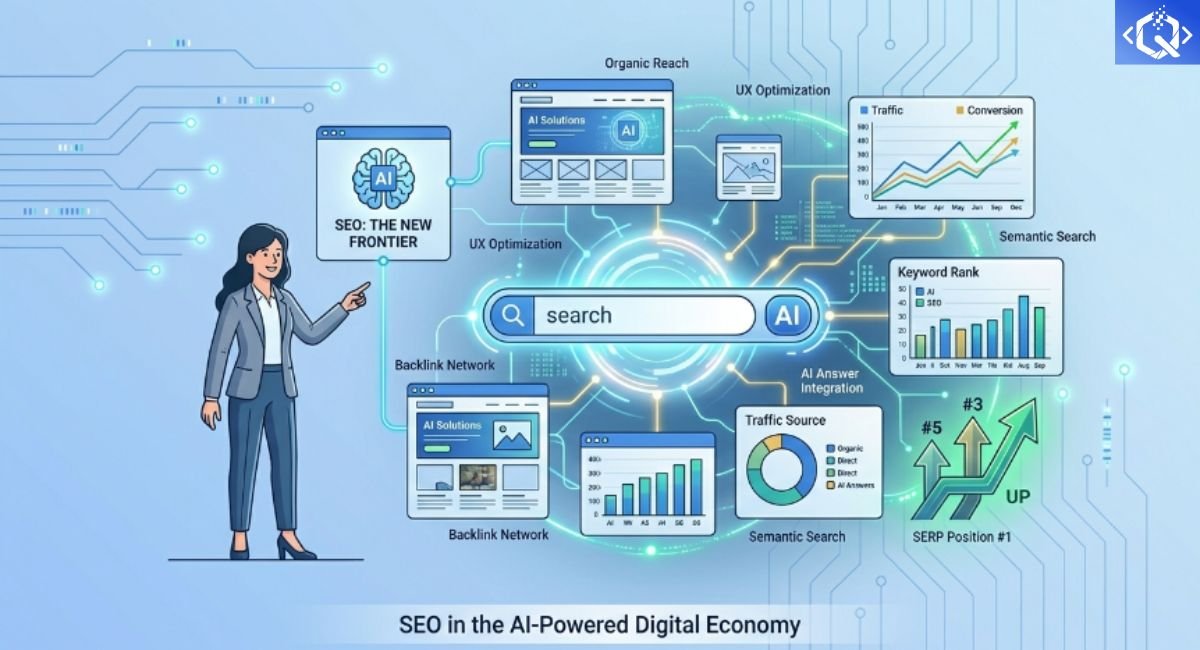
SEO in Modern World
SEO is no longer just a technical trick. It has become the backbone of search engine optimization, shaping how brands appear across Google and AI systems. Search Engine Optimization (SEO) is the practice of increasing the quantity and quality of traffic to your website through organic search engine results. With 68% of online experiences beginning with a search engine, SEO has become essential for any business wanting to be found online.
The SEO landscape has evolved dramatically. What worked five years ago—keyword stuffing, low-quality backlinks, and thin content—now results in penalties rather than rankings. Modern SEO strategies focus on user experience, content quality, technical excellence, and authority building. Businesses that adapt to these changes see sustained organic growth, while those using outdated tactics watch their traffic decline as search algorithms become more sophisticated.
In 2026, SEO intersects with AI search, voice search, and visual search. Generative AI is changing how people search and how search engines return results. Google's SGE (Search Generative Experience) and similar technologies are reshaping the search landscape, making SEO more important than ever even as tactics evolve. Understanding these shifts is critical for maintaining visibility as search paradigms change.
Why SEO is Important for Site Owners and Businesses
SEO directly influences visibility, trust, and revenue. The top organic result receives 27% of all clicks, while the #10 result receives just 2.5%. Without SEO, even high-quality websites remain invisible to potential customers searching for exactly what they offer. Organic search drives 53% of all website traffic, making it the largest single channel for most businesses, surpassing social media, paid search, and referrals combined.
Unlike paid advertising, where traffic stops when budget runs out, SEO delivers sustainable, long-term results. An optimized page continues attracting traffic for years after initial investment, providing exceptional ROI. The average cost-per-click for paid search across industries is $2-4, while organic clicks cost nothing incremental—making SEO one of the highest-ROI marketing channels available.
Beyond traffic, SEO builds brand credibility and trust. 75% of users never scroll past the first page of search results, and appearing on page one signals authority and relevance. Users trust organic results more than paid ads, with 70% preferring organic listings over sponsored content. This trust advantage translates into higher conversion rates for organic traffic compared to other channels.
| Factor | Without SEO | With SEO |
|---|---|---|
| Visibility | Low - buried on page 5+ | High - top 3 positions |
| Traffic | Paid only or minimal | Organic + sustainable |
| Trust | Weak authority signals | Strong domain authority |
| ROI | Short-term, high cost | Long-term, low incremental cost |
| Click-through rate | <1% for position 10+ | 27%+ for position 1 |
| Brand credibility | Low perceived authority | High perceived expertise |
How Search Engines and AI Search Work in 2026
Search engines rely on sophisticated algorithms using machine learning and big data analytics. Google processes over 8.5 billion searches daily, using hundreds of ranking factors to determine relevance and authority. Modern AI search systems use natural language processing (NLP) to understand query intent, not just keywords, improving result relevance dramatically.
The search process involves three key stages: crawling (discovering pages), indexing (storing and analyzing content), and ranking (ordering results by relevance). Search engines use bots called spiders or crawlers to follow links and discover new content. Once discovered, pages are analyzed for content quality, keyword relevance, technical factors, and authority signals before being added to the index.
When a user enters a query, search engines evaluate thousands of pages from their index to find the most relevant results. Factors considered include: keyword relevance (does the page contain the words searched?), content quality (is the information comprehensive and accurate?), user experience (is the page fast and mobile-friendly?), backlink profile (do other authoritative sites link here?), and freshness (is the content current?).
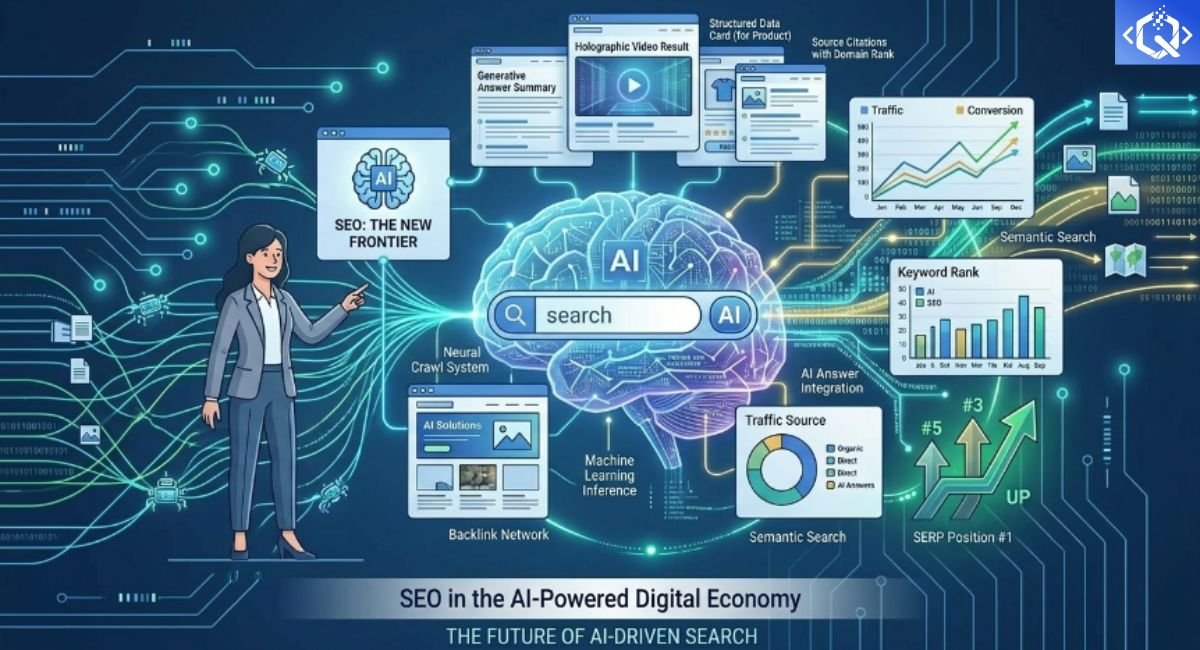
AI Search Engines
The Anatomy of Google's Ranking Algorithm
| Algorithm | Introduction | Primary Focus | Key Ranking Factors |
|---|---|---|---|
| Panda | 2011 | Content quality | Thin content, duplicate content, content farms |
| Penguin | 2012 | Link quality | Spammy backlinks, exact-match anchor text |
| Hummingbird | 2013 | Query understanding | Conversational search, semantic meaning |
| RankBrain | 2015 | User intent | Click-through rate, dwell time, pogo-sticking |
| BERT | 2019 | Natural language | Prepositions, context, nuance |
| MUM | 2021 | Multitask understanding | Cross-language, multimodal (text, image) |
| SGE | 2023+ | Generative AI | AI-generated summaries, conversational answers |
Types of SEO: On-Page, Off-Page, and Technical SEO
Effective SEO requires a holistic approach addressing three core areas. On-page SEO focuses on content and HTML optimization—keywords, meta tags, headings, internal links, and content quality. These are factors you directly control on your website. On-page optimization typically drives 30-40% of ranking improvement potential.
Off-page SEO builds authority through external signals—backlinks, social shares, brand mentions, and citations. Backlinks remain among the strongest ranking factors, with sites having high-quality backlinks ranking significantly higher than those without, even with comparable content. Building authoritative backlinks takes 3-6 months to show impact but provides lasting value.
Technical SEO ensures search engines can crawl, index, and understand your site—site speed, mobile-friendliness, structured data, XML sitemaps, robots.txt, and HTTPS security. Technical issues can prevent even great content from ranking, making this foundation essential before investing in other SEO activities. 40-60% of websites have critical technical SEO issues limiting their potential.
Types of SEO
The 3 Pillars of SEO Success
- Relevance: Does your content answer the user's question? Search engines evaluate keyword usage, topic coverage, semantic relationships, and content depth. Adding related concepts and answering common questions improves relevance signals.
- Authority: Does your site have credibility? Measured through backlinks from reputable sites, domain age, brand mentions, and expert authorship. Building authority takes 6-12 months of consistent effort but provides compounding returns.
- Technical Performance: Can search engines access and render your content? Includes site speed (sub-2 second load times), mobile responsiveness (Google's mobile-first indexing), secure HTTPS, clean code, and proper internal linking structure.
How SEO Has Evolved from Early Days to AI Era
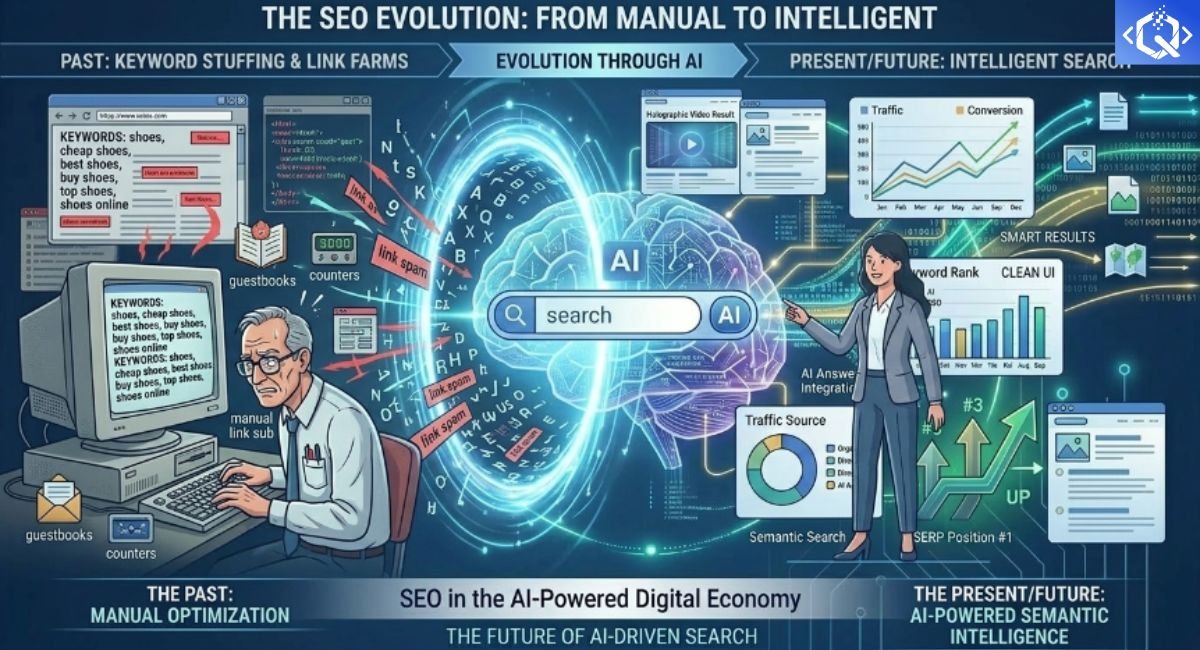
From keyword stuffing to modern AI systems using natural language processing, SEO has changed dramatically. Early SEO (1990s-2000s) focused on keyword density—pages with exact-match keywords 5-7% of the time ranking highly regardless of quality. This led to terrible user experiences as pages were written for search engines, not people.
Google's major algorithm updates systematically penalized manipulation while rewarding genuine quality. Panda (2011) targeted thin content, Penguin (2012) targeted link spam, and Hummingbird (2013) introduced conversational search. These updates forced SEO practitioners to focus on users rather than engines, dramatically improving search quality.
Today's AI-powered search understands intent, context, and concepts—not just keywords. Google's BERT (2019) improved understanding of prepositions and word order, while MUM (2021) introduced multitask understanding across languages and formats. The latest SGE (Search Generative Experience) uses large language models to generate direct answers, potentially changing how users interact with search results entirely.

SEO Evolution
Core Web Vitals: Google's Page Experience Signals
| Metric | Measurement | Good Threshold | Poor Threshold | Impact |
|---|---|---|---|---|
| Largest Contentful Paint (LCP) | Loading performance | <2.5 seconds | >4.0 seconds | User-perceived load speed |
| First Input Delay (FID) | Interactivity | <100 milliseconds | >300 milliseconds | Responsiveness to clicks |
| Cumulative Layout Shift (CLS) | Visual stability | <0.1 | >0.25 | Content shifting while loading |
| Interaction to Next Paint (INP) | Overall responsiveness (new) | <200 milliseconds | >500 milliseconds | Overall interactivity |
Common SEO Mistakes That Kill Rankings
Many websites fail because they ignore intent and focus only on keywords. Keyword cannibalization—multiple pages targeting the same keyword—confuses search engines and dilutes authority. Conduct regular content audits to consolidate or differentiate similar pages, ensuring each targets unique primary keywords.
Thin content pages with minimal useful information rank poorly regardless of backlinks. Search engines evaluate content depth, comprehensiveness, and uniqueness. Pages under 300 words rarely rank for competitive terms, while comprehensive 1500-2000 word guides consistently outperform shorter alternatives when relevance is equal.
Poor mobile experience severely impacts rankings since Google's mobile-first indexing. Sites not optimized for mobile see 50-70% lower organic visibility. Broken links (404 errors) waste crawl budget and frustrate users. Duplicate content confuses search engines about which version to rank. Slow page speed directly correlates with lower rankings and higher bounce rates—each second delay reduces conversions by 4.5%.
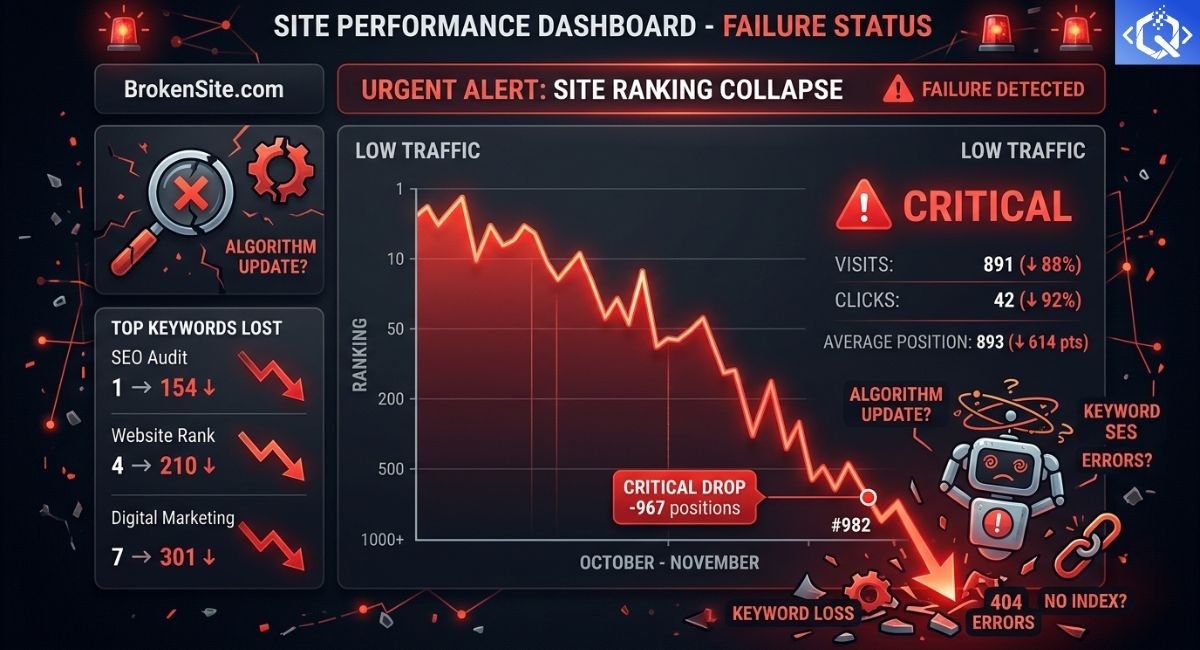
SEO Mistakes
Common SEO Mistakes Checklist
- Keyword stuffing instead of natural language
- Duplicate or thin content across pages
- Neglecting mobile optimization (non-responsive design)
- Slow page load times (>3 seconds)
- Broken internal and external links (404 errors)
- Missing or duplicate meta descriptions
- No XML sitemap or robots.txt configuration
- Ignoring structured data/schema markup
- Poor internal linking structure
- Not tracking or analyzing SEO performance
On-Page SEO: Optimizing Your Content
Keyword research is the foundation of on-page SEO. Identify terms your target audience searches for with significant volume and achievable competition. Long-tail keywords (3-5 words) convert 2-3x higher than broad terms, despite lower volume. Use tools like Google Keyword Planner, Ahrefs, or Semrush to discover opportunities and assess difficulty.
Title tags remain among the strongest on-page ranking factors. Optimize titles with primary keywords near the beginning, keep under 60 characters, and make them compelling to increase click-through rates. Titles with numbers, questions, or emotional triggers outperform generic descriptions by 30-50% CTR.
Meta descriptions don't directly impact rankings but significantly influence click-through rates. Write compelling descriptions under 160 characters that accurately summarize content and include primary keywords. Increased CTR signals relevance to search engines, indirectly improving rankings over time.
On-Page SEO Checklist
- Conduct keyword research before creating content
- Optimize title tags (primary keyword near start, <60 characters)
- Write unique meta descriptions for every page (under 160 characters)
- Use H1 headings (one per page) containing target keywords
- Structure content with H2/H3 subheadings for readability
- Include primary keywords in first 100 words of content
- Use semantic keywords and related terms throughout
- Optimize images with descriptive alt text and filenames
- Internal link to relevant existing content
- Ensure content depth (minimum 1000+ words for competitive topics)
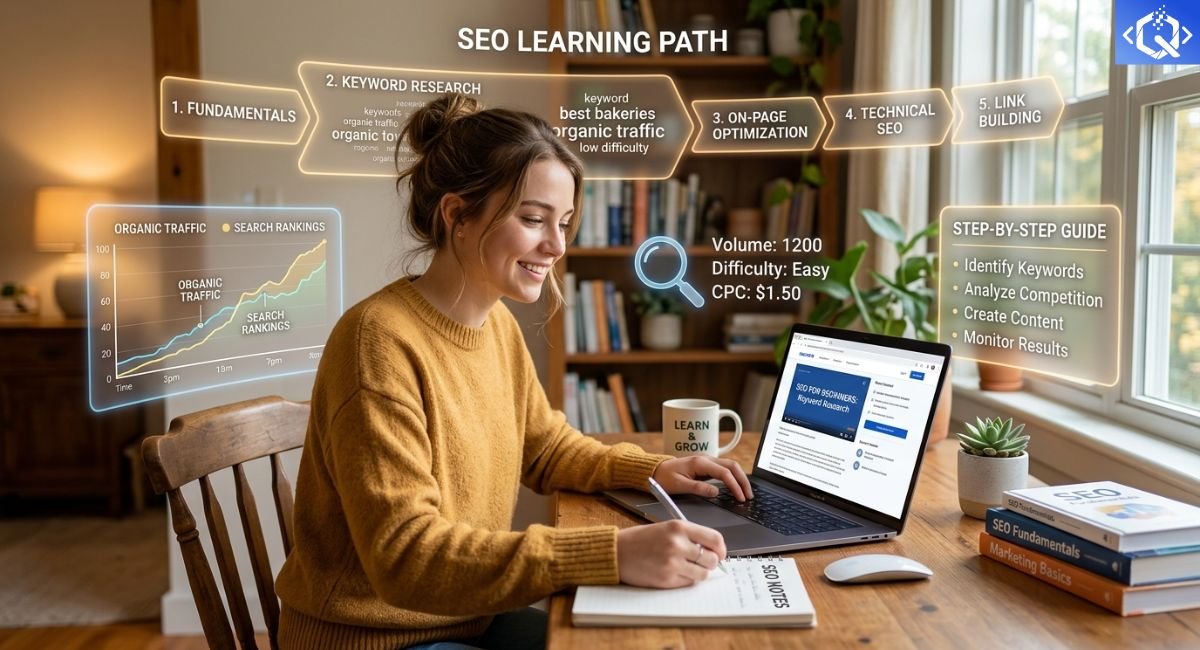
On-Page SEO
Off-Page SEO: Building Authority
Link building remains among the strongest ranking factors, with sites having quality backlinks ranking significantly higher than those without. Google's algorithm treats each backlink as a "vote of confidence," with votes from authoritative, relevant sites carrying more weight. Domain authority (DA) scores from 1-100 predict ranking potential, with 40+ generally competitive, 60+ highly authoritative.
Effective link building strategies in 2026 include: content marketing (creating link-worthy assets like original research, infographics, tools), digital PR (earning coverage from news sites and industry publications), guest posting (contributing to authoritative industry blogs), broken link building (finding dead links and suggesting your content as replacement), and resource page link building (getting listed on curated industry resource pages).
Quality matters more than quantity. A single backlink from an authoritative industry site can outweigh hundreds of low-quality directory listings. Focus on building relationships with relevant publishers rather than mass outreach. Avoid black-hat techniques like buying links, link exchanges, or private blog networks (PBNs), which risk manual penalties and ranking drops when discovered.
Technical SEO: Ensuring Search Engine Access
Technical SEO ensures search engines can discover, crawl, and index your content. XML sitemaps guide crawlers to your important pages, while robots.txt controls which areas search engines should avoid. Submit sitemaps to Google Search Console and Bing Webmaster Tools for faster indexing.
Site speed directly impacts rankings and user experience. Google's Speed Update made page speed a ranking factor for mobile searches. Optimize images (compress, use WebP format), minify CSS/JS, leverage browser caching, use a CDN, and upgrade hosting for faster Time To First Byte (TTFB). Sites loading in under 2 seconds achieve 1.5x higher conversion rates than those taking 3+ seconds.
Mobile-first indexing means Google predominantly uses the mobile version of your site for ranking and indexing. Ensure responsive design, readable fonts without zooming, touch-friendly buttons (minimum 48px tap targets), and no horizontal scrolling. Mobile usability issues affect rankings even if desktop version is perfect.

Technical SEO
Local SEO: Ranking for Location-Based Searches
For businesses serving specific geographic areas, local SEO drives foot traffic and phone calls. Google Business Profile optimization is essential—complete all fields, select accurate categories, add photos, collect reviews, and post updates regularly. Businesses with complete GBP profiles receive 7x more clicks than those with incomplete information.
Local citations (name, address, phone number listings) on directories like Yelp, Yellow Pages, and industry-specific sites build local authority. Ensure NAP consistency across all listings—inconsistent information confuses search engines and customers. Use citation management tools to audit and correct existing listings.
Localized content includes location-specific landing pages, area guides, and mentions of local landmarks, events, and terminology. Embed Google Maps on contact pages, encourage customer reviews mentioning location, and participate in local community events to generate local relevance signals.
SEO Analytics and Performance Tracking
| Metric | Tool | Benchmark | Action |
|---|---|---|---|
| Organic traffic | Google Analytics | 10%+ monthly growth | Invest in top-performing content |
| Keyword rankings | Semrush/Ahrefs | Top 3 for priority terms | Optimize #4-10 positions |
| Click-through rate | Google Search Console | 3-5% average | Improve titles/meta descriptions |
| Backlink profile | Ahrefs/Majestic | DA 30+ for competitive niches | Build authoritative links |
| Core Web Vitals | PageSpeed Insights | All metrics GOOD | Fix technical issues |
| Conversion rate | Google Analytics | 1-3% typical e-commerce | Optimize calls-to-action |
The Future of SEO: AI, Voice, and Visual Search
AI-generated search results are changing the search landscape. Google's SGE (Search Generative Experience) provides AI-generated answers above traditional organic results, potentially reducing click-through rates for informational queries. SEO strategies must adapt to optimize for appearing in AI-generated answers through structured data, clear answers, and authoritative sources.
Voice search now accounts for 20-30% of all searches, with 55% of teens and 40% of adults using voice search daily. Voice queries are longer, more conversational, and often question-based (who, what, where, when, why, how). Optimize for featured snippets and conversational long-tail keywords to capture voice search traffic.
Visual search allows users to search using images rather than text. Google Lens and Pinterest Lens are leading visual search platforms. Optimize high-quality images with descriptive filenames, alt text, surrounding content, and ImageObject schema markup. E-commerce sites benefit particularly from visual search, with users 30% more likely to purchase after visual search than text search.

Future of SEO
Case Study: SEO Transformation in 6 Months
A mid-sized e-commerce company (500 SKUs, $2M annual revenue) invested $30,000 in comprehensive SEO over 6 months. Their pre-SEO state: 5,000 monthly organic visitors, 1.5% conversion rate, page 2-3 rankings for key product terms, domain authority 22, and 500 backlinks from low-quality sources.
Actions taken: technical audit fixing 200+ issues (site speed improved from 4.2s to 1.8s), content optimization for 50 priority pages, link building campaign earning 150 high-quality backlinks, schema markup implementation, and local SEO optimization for physical locations.
Results after 6 months: 25,000 monthly organic visitors (+400%), conversion rate improved to 2.8% (+87%), 7 primary keywords ranking page 1, domain authority increased to 38, and organic revenue grew from $500k to $1.8M annually—6x return on SEO investment within first year.
Final Thoughts on SEO in the Modern Digital World
SEO has evolved into a complex system powered by intelligence, data, and automation. Brands that adapt will dominate future search ecosystems. The fundamentals remain: create great content, earn authoritative links, and provide excellent user experiences. Technology changes, but user needs don't—pages that genuinely help people rank best.
Start with a solid technical foundation, then invest in content that answers real questions better than any competitor. Build relationships, not just links. Track performance religiously and iterate based on data. SEO is a marathon, not a sprint—consistent effort over months and years produces compounding returns that transform businesses.
FAQs About SEO
FAQs
What is SEO and how does it work?
SEO (Search Engine Optimization) improves website visibility in organic search results by optimizing content, technical elements, and authority signals. Search engines crawl, index, and rank pages based on relevance and authority to user queries.
How long does SEO take to show results?
Initial improvements often appear within 2-4 months, with significant results typically taking 6-12 months. Highly competitive industries may require 12-24 months for substantial ranking improvements. SEO effectiveness compounds over time—early investments pay increasing dividends as authority grows.
How much does SEO cost?
SEO costs range from $1,000-5,000/month for local/small business, $2,500-10,000/month for mid-market, and $10,000-50,000+/month for enterprise. One-time consulting engagements range $5,000-30,000. Expect 6-12 month commitments for meaningful results.
Can I do SEO myself?
Yes, basic SEO is learnable, but competitive industries benefit from professional expertise. DIY SEO works for simple local businesses willing to invest significant time learning. Complex technical issues, competitive link building, and content strategy at scale generally require experienced practitioners.
Is SEO dead due to AI?
No—AI is changing SEO tactics but making it more important. Search engines still need signals to determine relevance and authority. Understanding user intent, creating quality content, and building authority remain essential. AI assists research and content creation but doesn't replace strategic SEO thinking.
What's the difference between SEO and PPC?
SEO generates organic (free) traffic through rankings, delivering long-term sustainable results. PPC (pay-per-click) generates paid traffic through ads appearing above organic results, delivering immediate but temporary traffic that stops when budget ends. SEO typically provides better long-term ROI, while PPC provides faster results.
Questions we get asked a lot
Can't find your answer here?
We work on web development, custom software, SaaS platforms, AI integrations, UI/UX design, e-commerce, and brand identity. We are selective — we only take on projects where we believe we can deliver real impact, not just complete tasks.
It depends on the scope. A landing page or brand refresh typically takes 2–3 days. A full SaaS product usually takes 8–16 days from kickoff to launch. We provide a detailed timeline in our proposal before any commitment.
You get a dedicated project manager, weekly progress updates, and access to a shared project board. We work in 2-week sprints with demos at the end of each cycle so you always know exactly where the project stands.
We work with both. Some of our best projects are zero-to-one builds with first-time founders. We are comfortable working with ambiguity and helping shape ideas into real products rather than just executing specifications.
We offer fixed-price quotes for clearly defined projects and a retainer model for ongoing development. We do not use hourly billing as it misaligns incentives. After a discovery call, we share a detailed proposal with transparent pricing.
Yes. Every project includes a 30-day post-launch support period at no additional cost. After that, we offer flexible maintenance retainers covering bug fixes, updates, and feature enhancements.
Yes. We often join ongoing projects, audit existing codebases, and improve or extend them. We always start with an honest technical assessment before moving forward.
Fill out the contact form or book a free 30-minute discovery call. We will discuss your goals, timeline, and budget — and if we are a good fit, you will receive a proposal within 3 business days.