
SaaS Management & Analytics: The Complete Enterprise Guide for 2026
What is SaaS Management and Why It Matters in 2026
SaaS Management & Analytics Dashboard
In 2026, businesses depend heavily on SaaS Management & Analytics to control costs, improve visibility, and optimize digital operations. As companies increasingly adopt SaaS management platform solutions, they face challenges like software sprawl and unused subscriptions. The average enterprise now uses over 300 SaaS applications, with 30% of licenses going completely unused.
This guide explores how modern organizations use SaaS spend management and SaaS cost optimization to gain financial clarity. With SaaS analytics tools, businesses can track performance, usage, and value across their entire technology stack. The global SaaS management market is projected to reach $45 billion by 2028, growing at 25% CAGR.
SaaS operations have become critical as remote and hybrid work models persist. IT leaders struggle with application rationalization, security compliance, and budget control across dozens of departmental subscriptions. Effective SaaS management transforms chaotic spending into strategic technology investment.
The True Cost of SaaS Sprawl: Statistics You Can't Ignore
| Metric | Industry Average | Impact |
|---|---|---|
| Unused SaaS licenses | 30-40% | $10K-$50K annual waste per 100 employees |
| Shadow IT applications | 15-20% of all SaaS | Hidden security and compliance risks |
| Duplicate functionality | $1,200 per employee annually | Redundant spend across teams |
| Time spent on manual SaaS management | 4-6 hours per week | $20K+ annual productivity cost |
| Organizations with centralized SaaS management | Only 35% | 65% lack visibility |
Key Benefits of SaaS Management for Businesses
A strong SaaS Management & Analytics strategy improves financial control. Businesses reduce waste by tracking unused licenses, removing redundant tools, and improving budget transparency. Companies implementing SaaS management report 25-35% reduction in software spending within the first year.
Modern enterprises use SaaS cost optimization, SaaS cost control solutions, and SaaS expense tracking to improve ROI. For example, a company using IT asset management SaaS can automatically detect inactive users and reduce costs. Procurement efficiency improves by centralizing vendor negotiation and contract management.

SaaS Management Benefits
Shadow IT: The Hidden Danger in Your SaaS Ecosystem
Shadow IT refers to applications purchased and used by departments without IT approval. It represents one of the biggest security and compliance risks in modern organizations. Studies show that 40-60% of SaaS applications are purchased outside of IT, creating governance gaps and data exposure risks.
Finance teams unknowingly pay for redundant subscriptions across different departments. Sales uses Salesloft, marketing uses Outreach, and customer success uses a third platform—all doing similar work. SaaS discovery tools help identify shadow IT by scanning expense reports, browser extensions, and SSO logs.
Effective SaaS governance policies balance security requirements with departmental autonomy. Approved vendors lists, self-service catalogs, and automated approval workflows reduce friction while maintaining control. Regular SaaS audits identify unauthorized applications and enforce compliance standards.
Core Features of a Modern SaaS Management Platform
A powerful SaaS Management & Analytics system depends on automation and integration. A modern SaaS optimization platform provides real-time control over subscriptions. Businesses use SaaS license management, SaaS subscription management, and SaaS lifecycle management to maintain oversight.
- Automated Discovery: Identifies all SaaS applications across the organization through credit card feeds, SSO logs, and browser extensions
- Usage Analytics: Tracks active users, feature adoption, and engagement metrics for each application
- License Optimization: Identifies unused licenses, recommends downgrades, and automates user offboarding
- Contract Management: Centralizes vendor agreements, renewal dates, and negotiated terms
- Spend Management: Tracks SaaS spending by department, cost center, and application category
- Security & Compliance: Monitors data access, SSO integration, and compliance certifications
- Automated Workflows: Triggers actions based on events—offboarding removes access, renewals require approval
What is SaaS Analytics?
SaaS analytics studies how users interact with tools and how value is created. Companies use SaaS analytics tools to track performance, adoption, and engagement. Unlike traditional usage tracking, value analytics correlates tool usage with business outcomes like revenue, productivity, and customer satisfaction.
Behavioral analytics reveals which features drive retention and which go unused. Journey analytics maps how users navigate applications, identifying friction points. Cohort analysis compares adoption patterns across teams, highlighting successful implementations and training needs.
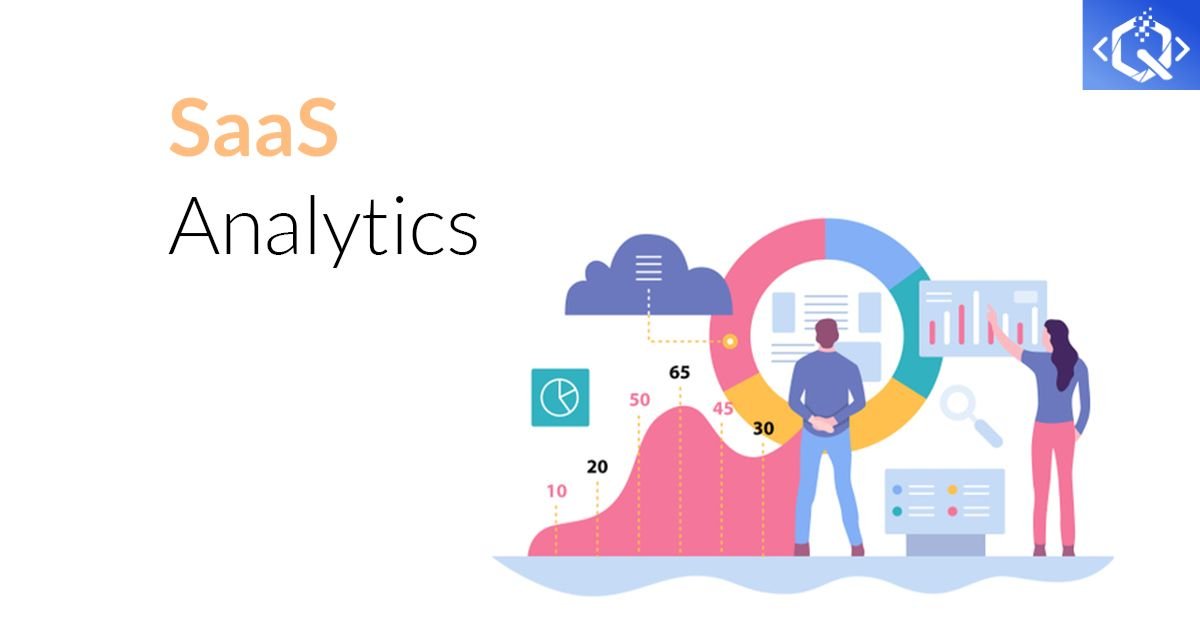
SaaS Analytics Tools Dashboard
Key SaaS Metrics You Must Track
| Metric Category | Key Metrics | Why It Matters |
|---|---|---|
| Adoption | DAU/MAU ratio, Feature usage rate | Identifies underutilized tools and training needs |
| Engagement | Session duration, Actions per user | Measures product stickiness and user dependency |
| Cost Efficiency | Cost per active user, Cost by department | Optimizes spend based on actual usage |
| Financial | Renewal risk, Contract compliance | Prevents unexpected costs and missed savings |
| Security | SSO coverage, Data access violations | Reduces breach risk and compliance issues |
Top SaaS Analytics Tools in 2026
| Tool | Primary Use | Best For |
|---|---|---|
| Amplitude | Product behavior analytics | Digital product teams |
| Hotjar | User experience tracking | UX research and optimization |
| Heap | Automatic event capture | Teams without extensive tracking setup |
| PostHog | Open-source analytics | Privacy-conscious organizations |
| Chargebee | Subscription revenue tracking | SaaS finance teams |
| ChartMogul | SaaS growth analytics | Subscription business executives |
| Torii | SaaS management & optimization | IT and procurement teams |
| Zluri | SaaS discovery & governance | Security and compliance teams |
How to Choose the Right SaaS Management Tool
Companies must evaluate scalability, integration support, and ease of use. A strong SaaS vendor management strategy ensures long-term stability. When evaluating tools, consider these criteria: Integration depth with your existing stack, automation capabilities for workflows, reporting flexibility, and API access for custom integrations.
Ask vendors about discovery methods—how they find unknown applications. Check user permissions and access controls. Evaluate deployment options (cloud vs. on-premise). Consider pricing models (per-user, per-application, or flat fee) and calculate ROI based on expected savings.
Common Challenges in SaaS Management and How to Solve Them
Issues like shadow IT, SaaS sprawl, and unmanaged subscriptions create financial leaks. Structured systems with SaaS visibility tools and SaaS management software eliminate waste. Integration complexity often prevents organizations from achieving single-pane visibility across their SaaS stack.
Solution: Implement an API-first approach. Use tools that connect with common identity providers (Okta, Azure AD), expense management platforms (Expensify, Coupa), and SSO logs. Decentralized purchasing authority without central oversight creates governance gaps.
Solution: Establish a SaaS procurement policy with approval workflows. Create a curated application catalog while allowing exceptions with proper review. Manual tracking using spreadsheets fails as organizations scale. Solution: Automate discovery and reporting to enable real-time visibility.
Best Practices for Optimizing SaaS Spend
- Conduct quarterly SaaS audits: Review all applications, licenses, and usage to identify optimization opportunities
- Implement automated license reconciliation: Sync HR systems with SaaS apps to automatically remove departed employee access
- Negotiate based on usage data: Use analytics to right-size contracts and negotiate better terms at renewal
- Establish a SaaS review board: Include stakeholders from IT, finance, security, and business units
- Create a vendor consolidation strategy: Reduce redundancy by consolidating similar tools
- Track unit economics: Measure SaaS cost per employee, per customer, and per revenue dollar
SaaS Security and Compliance Considerations
SaaS security extends beyond traditional perimeter defense. Each application represents a potential data breach vector. SSO integration enables centralized access control and reduces password fatigue. SCIM provisioning automates user onboarding and offboarding, ensuring former employees lose access immediately.
Data residency requirements matter when applications store customer information in different geographic regions. SOC2, ISO 27001, and GDPR compliance should be verified during vendor selection. Data Loss Prevention (DLP) tools monitor sensitive data moving between SaaS applications.
The Role of AI in SaaS Management
Artificial intelligence is transforming SaaS management through predictive analytics and automated recommendations. AI algorithms identify unused licenses, predict renewal needs, and suggest optimal contract terms based on historical usage patterns. Anomaly detection alerts administrators to unusual spending or access patterns.
Natural language processing enables conversational interfaces for SaaS management queries. Ask "What applications does the marketing team use?" and receive instant answers. Automated negotiation bots help procurement teams optimize renewal terms by analyzing vendor pricing benchmarks.
Case Study: How a Mid-Sized Company Saved $500K with SaaS Management
A 500-employee technology company implemented SaaS management and achieved remarkable results. Before implementation, they had 280 distinct SaaS applications costing $2.2 million annually. Discovery revealed 45 duplicate applications and 38% unused licenses across the organization.
After implementing a SaaS management platform, they eliminated 60 redundant applications, removed 425 unused licenses, and consolidated vendors for better pricing. Annual SaaS spend dropped to $1.7 million—a $500,000 savings. Additionally, 12 security vulnerabilities were identified and remediated.
Future Trends in SaaS Management
Generative AI will enable natural language queries about SaaS usage and costs. Automated contract management will negotiate renewals based on usage data and market benchmarks. Predictive analytics will forecast future needs and recommend scaling before problems occur.
Embedded iPaaS capabilities will automate workflows between applications, reducing manual data transfer. Zero-trust architecture will extend to SaaS management, requiring continuous verification for access. Usage-based pricing optimization will help companies choose optimal pricing tiers based on actual consumption patterns.
Final Thoughts: Building a Scalable SaaS Management Strategy
A strong strategy creates long-term stability. With SaaS management software, SaaS analytics tools, and integrated ecosystems, companies build a future-ready stack with better governance. Start with discovery to understand your current landscape, then implement policies iteratively rather than attempting comprehensive transformation overnight.
Remember that SaaS management is an ongoing discipline, not a one-time project. Regular reviews, automated monitoring, and continuous optimization ensure sustained value. Organizations that master SaaS management gain competitive advantage through cost efficiency, security compliance, and operational agility.
FAQs About SaaS Management & Analytics
FAQs
What is SaaS management?
SaaS management is the practice of discovering, tracking, optimizing, and governing software-as-a-service applications across an organization to control costs, improve security, and maximize value from software investments.
How much can companies save with SaaS management?
Organizations typically save 25-35% on SaaS spending within the first year of implementing proper SaaS management practices, primarily through eliminating unused licenses and consolidating redundant applications.
What is shadow IT and why is it a problem?
Shadow IT refers to applications purchased and used without IT approval or oversight. It creates security vulnerabilities, compliance risks, and financial waste through duplicate functionality and unmanaged spending.
What's the difference between SaaS management and SaaS analytics?
SaaS management focuses on discovery, cost control, and governance. SaaS analytics focuses on understanding usage patterns, user behavior, and value creation from applications.
How do I get started with SaaS management?
Start with discovery to inventory all applications, then audit usage to identify low-value or unused tools, establish procurement policies, implement automated workflows, and regularly review your SaaS stack.
Questions we get asked a lot
Can't find your answer here?
We work on web development, custom software, SaaS platforms, AI integrations, UI/UX design, e-commerce, and brand identity. We are selective — we only take on projects where we believe we can deliver real impact, not just complete tasks.
It depends on the scope. A landing page or brand refresh typically takes 2–3 days. A full SaaS product usually takes 8–16 days from kickoff to launch. We provide a detailed timeline in our proposal before any commitment.
You get a dedicated project manager, weekly progress updates, and access to a shared project board. We work in 2-week sprints with demos at the end of each cycle so you always know exactly where the project stands.
We work with both. Some of our best projects are zero-to-one builds with first-time founders. We are comfortable working with ambiguity and helping shape ideas into real products rather than just executing specifications.
We offer fixed-price quotes for clearly defined projects and a retainer model for ongoing development. We do not use hourly billing as it misaligns incentives. After a discovery call, we share a detailed proposal with transparent pricing.
Yes. Every project includes a 30-day post-launch support period at no additional cost. After that, we offer flexible maintenance retainers covering bug fixes, updates, and feature enhancements.
Yes. We often join ongoing projects, audit existing codebases, and improve or extend them. We always start with an honest technical assessment before moving forward.
Fill out the contact form or book a free 30-minute discovery call. We will discuss your goals, timeline, and budget — and if we are a good fit, you will receive a proposal within 3 business days.