Custom Web Development Services for Businesses: Complete Guide 2026
What Is Custom Web Development?
In today's competitive digital landscape, businesses rely on custom web development services to build platforms that truly match their goals and operations. Unlike rigid templates, tailored systems offer flexibility, performance, and long-term scalability. Many companies now prefer custom business software development because it allows complete control over features, security, and user experience.
This approach supports enterprise CRM systems that grow with business needs instead of limiting them. With modern web application development services, organizations can integrate tools, automate workflows, and improve efficiency across departments. The global custom software development market is projected to reach $650 billion by 2027, growing at a CAGR of 22%.

Custom Web Development Services
Why Custom Web Development Matters in 2026
The digital economy demands differentiation. Custom web development matters more than ever because generic solutions cannot address unique business challenges. Companies that invest in tailored platforms report 35% higher customer satisfaction and 42% better operational efficiency compared to those using off-the-shelf solutions. Digital transformation initiatives increasingly prioritize custom development over packaged software.
Legacy system modernization drives much of this demand. Organizations trapped by outdated technology seek custom web application development to break free from vendor lock-in and technical debt. Modern custom development leverages cloud-native architectures, microservices, and API-first designs that enable continuous innovation without disruptive overhauls.
Benefits of Custom Website Development
The real strength of custom CRM development services lies in long-term business impact. Companies gain control over design, logic, and data flow. Many organizations adopt enterprise CRM systems because they want systems that grow with them. Custom solutions eliminate the compromise inherent in pre-built software.
Another major advantage is automation and intelligence. With workflow automation software and business process automation tools, companies reduce manual work and increase speed. Custom systems integrate seamlessly with existing tools, eliminating data silos and duplicate entry. Competitive advantage emerges from unique features that competitors cannot easily replicate.
Website Development Benefits
Top 10 Industries Benefiting from Custom Web Development
- Healthcare: HIPAA-compliant patient portals and telemedicine platforms with custom workflows
- Finance: Secure trading platforms, loan management systems, and regulatory reporting tools
- E-commerce: Headless commerce solutions with personalized shopping experiences
- Real Estate: Property management systems with MLS integration and virtual tours
- Education: Learning management systems with gamification and assessment engines
- Manufacturing: IoT-integrated production monitoring and supply chain optimization
- Logistics: Route optimization, fleet management, and real-time tracking systems
- Hospitality: Booking engines with dynamic pricing and guest experience platforms
- SaaS: Multi-tenant subscription platforms with usage-based billing
- Non-profit: Donation management systems with automated receipt generation
Types of Web Development You Should Know
Modern development is divided into multiple layers, each serving a specific role in building scalable systems. Businesses that invest in web application development services often combine all three types to create powerful digital platforms. Understanding these distinctions helps organizations plan resources and timelines effectively.
Front-End Development (User Interface)
Front-End Development
Front-end development focuses on user experience. It uses front-end development frameworks like React, Vue.js, or Angular to build interfaces that feel fast, clean, and responsive. Good design improves engagement by 200% and reduces bounce rates significantly. Modern front-end development emphasizes accessibility, performance optimization, and cross-browser compatibility.
Progressive Web Apps (PWAs) represent the evolution of front-end development, delivering app-like experiences through browsers. They work offline, send push notifications, and load instantly—capabilities previously reserved for native applications. Responsive design ensures seamless experiences across devices, from desktop monitors to mobile phones.
Back-End Development (Server Logic)
Back-End Development Architecture
Back-end development handles data, logic, and system rules. It builds strong back-end development architecture and includes CRM database design, API development, and business logic implementation. Popular back-end technologies include Node.js, Python/Django, Java/Spring Boot, and .NET Core.
Modern back-end development embraces serverless architecture, reducing infrastructure management overhead. Microservices break monolithic applications into independently deployable services, enabling teams to update components without full redeployment. Event-driven architectures process real-time data streams, supporting features like live notifications and analytics.
Full-Stack Development (Complete Solution)
Full-stack development combines both layers. Teams offering full-stack web development services handle everything from UI to server logic. It is often used in SaaS CRM platforms and complex web applications requiring end-to-end expertise. Full-stack developers understand how front-end and back-end interact, enabling optimized system design.
Custom Website vs CMS-Based Website: Detailed Comparison
| Feature | Custom Website | CMS-Based Website |
|---|---|---|
| Flexibility | Complete creative freedom | Limited by theme/plugin capabilities |
| Scalability | Architected for growth | Scaling limitations at high traffic |
| Performance | Optimized for speed | Generic, often requires optimization plugins |
| Security | Custom security implementation | Relies on core/plugin updates |
| Cost | Higher upfront investment | Lower initial cost, higher maintenance |
| Time to Market | 4-12 weeks typical | 1-4 weeks typical |
| SEO Capabilities | Complete control | Plugin-dependent |
| Integrations | Seamless custom integrations | Limited to available plugins |
Step-by-Step Custom Website Development Process
- Step 1 — Requirement Analysis & Planning: Defines goals and workflows, connecting to custom CRM implementation guide. This phase typically takes 1-2 weeks and produces detailed specifications.
- Step 2 — UI/UX Design: Focuses on usability, supporting how CRM improves customer relationships. Wireframes, mockups, and prototypes are created and validated with user testing.
- Step 3 — Frontend Development: Uses front-end development frameworks for responsiveness. Component libraries are built and styled according to design systems.
- Step 4 — Backend Development: Defines CRM system for small businesses scalability. Database schemas, APIs, and business logic are implemented.
- Step 5 — Testing & Quality Assurance: Identifies issues in how to manage leads in CRM workflows. Includes unit testing, integration testing, and user acceptance testing.
- Step 6 — Deployment & Launch: Cloud systems like cloud-based CRM solutions ensure smooth scaling. Staging environment validation precedes production deployment.
Essential Features of a Modern Custom Website
Modern systems require advanced capabilities. Features like role-based access control systems ensure data security. Integration layers support CRM integration with business tools through REST APIs and webhooks. Analytics dashboards provide visibility into user behavior, system performance, and business metrics.
Personalization engines deliver tailored experiences based on user preferences and behavior. Search functionality with faceted filtering helps users find content quickly. Form builders and workflow designers empower non-technical users to configure business processes without coding.
Custom CRM & Business System Integration
Integration is the backbone of modern systems. CRM integration services connect sales, marketing, and support tools. Businesses also rely on API integration services to synchronize data across their technology stack. Well-designed APIs reduce integration costs by 60% and enable faster feature development.
Event-driven architectures trigger actions across systems based on user behavior. For example, a new lead in the CRM automatically creates tasks for sales representatives and adds contacts to email marketing campaigns. Data synchronization ensures consistency across platforms, eliminating manual data entry and reducing errors.
Technologies Used in Custom Web Development (2026 Edition)
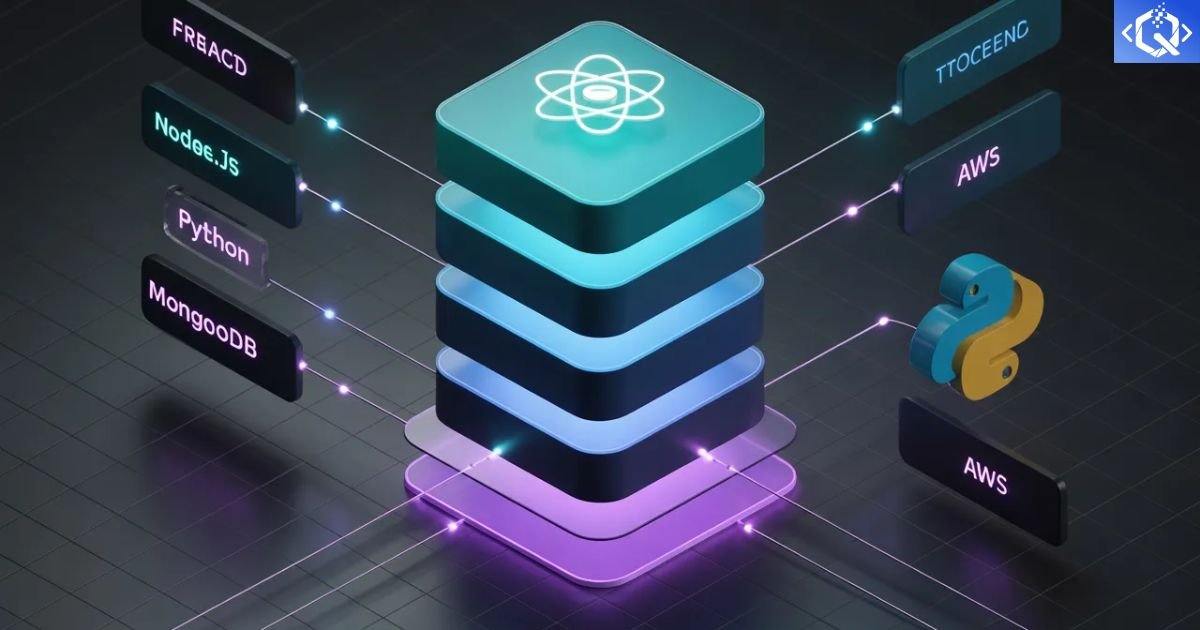
Technologies Used in Web Development
Modern systems rely on a strong technology stack. Tools like SaaS CRM platforms and cloud infrastructure support scalability, and data management systems ensure structured storage. Containerization using Docker enables consistent environments across development, testing, and production.
Front-end technologies have evolved significantly. React Server Components reduce client-side JavaScript, improving initial load times. TypeScript provides type safety, catching errors during development. Tailwind CSS enables rapid UI development while maintaining consistency. Next.js and Remix offer full-stack capabilities with optimized performance.
Back-end technologies emphasize performance and developer experience. Node.js with TypeScript remains popular for API development. Go excels at high-concurrency services. Rust is emerging for performance-critical components. GraphQL provides flexible data fetching, reducing over-fetching and under-fetching common in REST APIs.
Cost of Custom Website Development
The cost of custom CRM development depends on complexity. Many compare custom CRM vs off the shelf CRM — custom systems cost more initially but offer better scalability and control. Typical custom website projects range from $20,000 for simple marketing sites to $200,000+ for complex web applications.
| Project Type | Typical Cost | Timeline |
|---|---|---|
| Simple Marketing Website (5-10 pages) | $5,000 - $15,000 | 4-6 weeks |
| E-commerce Store (100-500 products) | $25,000 - $50,000 | 8-12 weeks |
| Custom Web Application (MVP) | $40,000 - $80,000 | 12-16 weeks |
| Enterprise Platform | $100,000 - $250,000+ | 4-6 months |
Common Mistakes to Avoid in Web Development
Weak architecture leads to poor scalability. Ignoring problems with generic CRM systems often forces migration later. Skipping automation means teams miss how to automate CRM workflows. Inadequate testing results in buggy releases damaging brand reputation.
Technical debt accumulation from quick fixes makes future changes expensive and risky. Poor documentation prevents team members from understanding system design and business rules. Security shortcuts expose sensitive data and create compliance violations with regulations like GDPR and CCPA.
Successful projects avoid scope creep by prioritizing features and using phased rollouts. Communication gaps between stakeholders and developers lead to misaligned expectations. Underestimating maintenance costs leaves organizations unprepared for ongoing investment in security updates, bug fixes, and feature enhancements.
Why Choose a Professional Web Development Agency
A strong agency provides expertise. Businesses search for the best CRM development company to ensure reliable delivery. Professional teams understand architecture, security, and integration. Development agencies bring cross-industry experience, applying lessons learned from previous projects to accelerate development.
Agencies offer dedicated teams with complementary skills including project managers, UX designers, front-end developers, back-end engineers, and QA testers. This structure ensures accountability and consistent quality. Fixed-price contracts provide budget predictability, while time and material engagements offer flexibility for evolving requirements.
Future Trends in Custom Web Development
The future of custom web development is shaped by emerging technologies. AI-powered development tools are accelerating coding while human oversight ensures quality. WebAssembly enables near-native performance for computationally intensive applications running in browsers. Edge computing reduces latency by processing data closer to users.
Voice user interfaces are becoming mainstream, requiring developers to consider voice interactions alongside traditional inputs. Augmented reality experiences are integrating with web applications, particularly in e-commerce and real estate. Blockchain integration enables decentralized applications and verifiable digital ownership.
Low-code and no-code platforms are democratizing development but remain limited for complex, unique requirements. Serverless architectures continue gaining adoption, reducing infrastructure management overhead. Real-time collaboration features are becoming expected, powered by WebSockets and WebRTC.
Measuring Success: KPIs for Custom Web Development
| KPI Category | Key Metrics | Target Range |
|---|---|---|
| Performance | Page load time, Time to Interactive | <2 seconds |
| User Engagement | Session duration, Pages per session | 3+ minutes, 4+ pages |
| Conversion | Conversion rate, Goal completion | 2-5% depending on industry |
| SEO | Organic traffic, Keyword rankings | 20%+ month-over-month growth |
| Technical | Error rate, Uptime | <0.1% errors, 99.9% uptime |
| Business ROI | Revenue attribution, Cost savings | 200%+ over 12 months |
Final Thoughts: Investing in Custom Web Development
Custom web development is no longer optional in competitive markets. Understanding how CRM helps business growth makes it clear that modern businesses need tailored systems. The investment in custom development pays dividends through operational efficiency, competitive differentiation, and adaptability to changing market conditions.
Organizations should approach custom development strategically, starting with well-defined requirements and realistic timelines. Agile methodologies enable course correction based on feedback, reducing waste and ensuring alignment with business goals. Successful projects balance ambition with pragmatism, delivering value incrementally rather than waiting for perfect, complete solutions.
FAQs About Custom Web Development
FAQs
What is custom web development?
It is the process of building a website or web app from scratch based on specific business needs instead of using ready-made templates, giving full control over design, features, and scalability.
How long does custom web development take?
Timelines vary by complexity: simple marketing websites take 4-6 weeks, e-commerce stores 8-12 weeks, and complex web applications 4-6 months.
How much does custom web development cost?
Costs range from $5,000 for simple sites to $250,000+ for enterprise platforms, depending on features, integrations, and development team location.
Is custom web development better than using WordPress or Shopify?
Custom development is better when you have unique requirements not met by existing solutions, need specific integrations, or anticipate significant scaling. CMS platforms work well for standard business websites and blogs.
Do I need to know technical details before hiring a developer?
No, but understanding your business goals, user needs, and must-have features helps developers propose appropriate solutions.
Will AI replace web developers?
No, AI accelerates coding but cannot replace system design, problem-solving, security architecture, and business logic decisions required for custom development.
What are the 7 steps in web design?
Planning, research, UI/UX design, content creation, development, testing, and deployment.
How do I maintain my custom website after launch?
Ongoing maintenance includes security updates, bug fixes, performance monitoring, feature enhancements, and regular backups. Budget 15-20% of initial development cost annually for maintenance.
Questions we get asked a lot
Can't find your answer here?
We work on web development, custom software, SaaS platforms, AI integrations, UI/UX design, e-commerce, and brand identity. We are selective — we only take on projects where we believe we can deliver real impact, not just complete tasks.
It depends on the scope. A landing page or brand refresh typically takes 2–3 days. A full SaaS product usually takes 8–16 days from kickoff to launch. We provide a detailed timeline in our proposal before any commitment.
You get a dedicated project manager, weekly progress updates, and access to a shared project board. We work in 2-week sprints with demos at the end of each cycle so you always know exactly where the project stands.
We work with both. Some of our best projects are zero-to-one builds with first-time founders. We are comfortable working with ambiguity and helping shape ideas into real products rather than just executing specifications.
We offer fixed-price quotes for clearly defined projects and a retainer model for ongoing development. We do not use hourly billing as it misaligns incentives. After a discovery call, we share a detailed proposal with transparent pricing.
Yes. Every project includes a 30-day post-launch support period at no additional cost. After that, we offer flexible maintenance retainers covering bug fixes, updates, and feature enhancements.
Yes. We often join ongoing projects, audit existing codebases, and improve or extend them. We always start with an honest technical assessment before moving forward.
Fill out the contact form or book a free 30-minute discovery call. We will discuss your goals, timeline, and budget — and if we are a good fit, you will receive a proposal within 3 business days.