
Custom E-Commerce Platform Development: The Complete Guide to Building Scalable Online Stores That Convert
Why Custom E-Commerce Platforms Outperform Off-the-Shelf Solutions
In the rapidly evolving digital retail landscape, custom e-commerce platform development has emerged as the preferred choice for businesses seeking competitive advantage. Unlike generic solutions, tailored platforms deliver unique customer experiences, seamless integration with existing systems, and unlimited scalability. The global e-commerce market, projected to reach $8 trillion by 2026, demands differentiated approaches that off-the-shelf platforms simply cannot provide.
Custom online store development offers complete control over every aspect of the customer journey, from product discovery through checkout. Businesses can implement unique features, custom workflows, and specialized functionality that reflects their brand identity and meets specific market needs. This flexibility translates directly into higher conversion rates and improved customer loyalty. Studies show custom e-commerce stores achieve 30-50% higher conversion rates compared to template-based competitors.

Custom E-Commerce Platform
The True Cost of Off-the-Shelf Platforms: Hidden Limitations
| Limitation | Impact | Custom Solution Advantage |
|---|---|---|
| Transaction fees | 2-3% additional on each sale | No platform transaction fees beyond payment gateway |
| Design constraints | Limited to theme capabilities | Complete creative freedom |
| Plugin dependency | Security risks from third-party code | Native functionality, no external dependencies |
| Data ownership issues | Limited export/API access | Complete data ownership and control |
| Scaling limits | Performance degradation at high volumes | Architected for unlimited scale |
| Vendor lock-in | Migration costs prevent switching | No vendor dependency |
Key Advantages of Custom E-Commerce Development
Organizations investing in e-commerce website development gain significant advantages over competitors using template-based solutions. Unlimited customization options allow businesses to create unique shopping experiences that stand out in crowded markets. Seamless third-party integrations connect with existing ERP, CRM, inventory management, and logistics systems without the limitations of pre-built connectors.
Superior performance optimization ensures fast page loads and smooth checkout experiences, directly impacting conversion rates and search rankings. Google research indicates that a 1-second delay in page load time reduces conversions by 20%. Custom platforms achieve sub-2-second load times consistently, while template solutions often struggle to meet Core Web Vitals thresholds.
Enhanced security measures protect sensitive customer data and payment information through custom-built encryption and compliance with PCI-DSS standards. Scalable architecture accommodates traffic spikes during peak seasons without performance degradation. Custom platforms handle Black Friday traffic loads that crash shared hosting environments.

E-Commerce Advantages
Headless Commerce Architecture: The Modern Approach
Headless commerce architecture separates the frontend presentation layer from backend commerce functionality. This decoupling enables development teams to update the user interface without touching backend systems, reducing deployment risk and accelerating feature delivery. Frontend developers can use modern frameworks like React, Vue.js, or Svelte, while backend teams focus on APIs, performance, and data integrity.
Headless architecture supports omnichannel commerce—the same backend powers web stores, mobile apps, social commerce, voice shopping, and in-store kiosks. Each channel receives optimized experiences without duplicating commerce logic. This approach reduces development costs by 40-60% compared to building separate systems for each channel.
Essential Features of Modern E-Commerce Platforms
Successful custom e-commerce solutions incorporate sophisticated features that meet customer expectations and drive revenue growth. Headless commerce architecture separates frontend presentation from backend functionality, enabling faster updates and omnichannel experiences. Progressive Web App capabilities deliver app-like experiences directly through mobile browsers, improving engagement and conversion rates by 30-40%.
AI-powered product recommendations analyze browsing and purchase history to suggest relevant items, increasing average order value by 15-25%. Personalized shopping experiences adapt content, pricing, and promotions based on user segments and behavior patterns. Advanced search functionality with faceted filtering helps customers find products quickly, reducing bounce rates by 40% and improving satisfaction scores significantly.

E-Commerce Features
Payment Gateway Integration for Custom Online Stores
Payment gateway integration is critical for custom e-commerce platforms. Modern systems support multiple payment methods including credit cards, digital wallets (Apple Pay, Google Pay), buy-now-pay-later services (Klarna, Afterpay, Affirm), and cryptocurrency. Multi-currency processing enables international sales with real-time exchange rates and localization, expanding addressable markets by 300%.
Advanced payment security measures include tokenization to protect sensitive card data, 3D Secure authentication for fraud prevention (reducing chargebacks by 40%), and automated PCI compliance scanning. Seamless checkout experiences with guest checkout options, address autocomplete, and one-click purchasing reduce cart abandonment rates by up to 35% compared to traditional checkout flows that require account creation.
Payment Integration
Inventory Management and Order Fulfillment Systems
Custom inventory management solutions integrate directly with e-commerce platforms to provide real-time stock visibility across multiple warehouses and sales channels. Automated reorder notifications prevent stockouts, while just-in-time inventory optimization reduces carrying costs by 20-30%. Multi-location inventory tracking supports omnichannel retail strategies including buy-online-pickup-in-store services, which 65% of consumers now expect.
Order fulfillment automation connects with shipping carriers to generate labels, track deliveries, and send status updates to customers. Returns management systems automate the reverse logistics process, improving customer satisfaction while controlling costs. Integrated order management systems provide unified visibility across all sales channels, simplifying operations for growing businesses and reducing fulfillment errors by 70%.
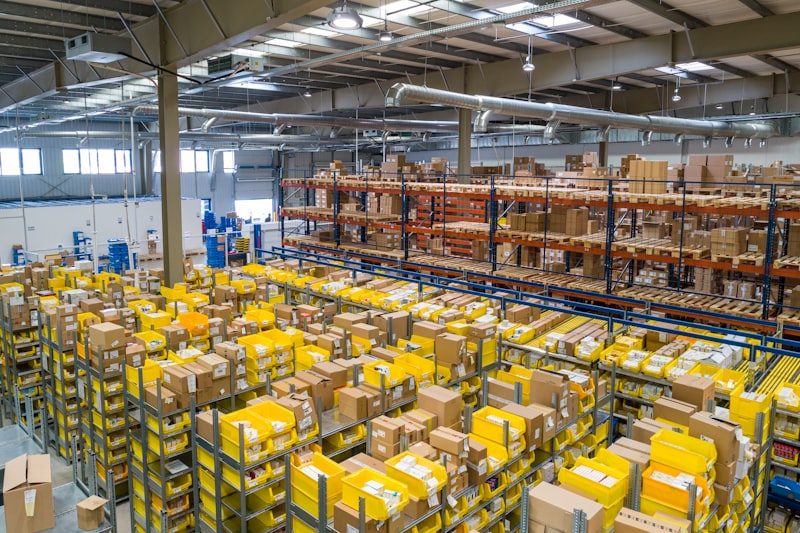
Inventory Management
Mobile-First Design and Performance Optimization
With mobile commerce projected to account for 60% of all e-commerce sales by 2027, mobile-first design is essential for custom e-commerce development. Responsive layouts automatically adapt to different screen sizes, while touch-optimized interfaces improve usability on smartphones and tablets. Accelerated Mobile Pages technology delivers near-instant load times for product pages accessed from search results, improving search rankings and user experience.
Performance optimization techniques include lazy loading for images (reducing initial page weight by 50%), browser caching for static assets, CDN implementation for global delivery (cutting latency by 60%), and database query optimization for fast product searches. Core Web Vitals optimization improves search rankings while delivering better user experiences. Progressive Web Apps with offline support maintain basic functionality even when internet connections are unstable.

Mobile Commerce
E-Commerce Analytics and Conversion Optimization
Custom e-commerce analytics solutions provide deeper insights than standard reporting tools. Sales performance dashboards track revenue, orders, and average order value in real-time. Customer behavior analytics reveal how visitors navigate through product pages and where they drop off during checkout. Product performance reports identify best-sellers, slow movers, and optimal pricing strategies, enabling data-driven inventory decisions.
A/B testing frameworks enable continuous optimization of product pages, checkout flows, and marketing campaigns. Companies running ongoing A/B tests improve conversion rates by 2-5x compared to those that don't. Heat mapping tools visualize user interactions to identify usability issues and opportunities. Funnel analysis pinpoints specific steps where customers abandon purchases, enabling targeted improvements that boost conversion rates by 15-25%.

E-Commerce Analytics
E-Commerce SEO: Driving Organic Traffic
| SEO Element | Implementation | Expected Impact |
|---|---|---|
| Technical SEO | Clean URLs, schema markup, fast load times | 50-100% organic traffic increase |
| Product Page Optimization | Unique descriptions, customer reviews, images | 30-50% conversion improvement |
| Category Page Strategy | Faceted navigation, internal linking | 40% higher category page rankings |
| Content Marketing | Blog posts, buying guides, gift recommendations | 200% more long-tail traffic |
| Link Building | Product reviews, gift guides, resource pages | 30-50% domain authority improvement |
Technology Stack for Custom E-Commerce Development
- Frontend frameworks: React with Next.js for SSR/SSG, Vue.js with Nuxt, or SvelteKit for maximum performance
- Backend technologies: Node.js for JavaScript shops, Python/Django for rapid development, or Go for high-concurrency needs
- Databases: PostgreSQL for transactional data, MongoDB for flexible schemas, Redis for caching and sessions
- Search engines: Elasticsearch or Algolia for fast, faceted product search
- Payment processing: Stripe Connect, Braintree, or Adyen for global payment acceptance
- Infrastructure: AWS, Google Cloud, or Azure with auto-scaling for traffic spikes
Cost Breakdown for Custom E-Commerce Development
| Project Type | Features | Development Cost | Timeline | Annual Maintenance |
|---|---|---|---|---|
| Basic Custom Store | 500 products, standard checkout, responsive design | $25,000-$40,000 | 2-3 months | $5,000-$8,000 |
| Mid-tier Platform | 5,000 products, custom features, multi-currency | $50,000-$80,000 | 4-6 months | $10,000-$15,000 |
| Enterprise Solution | Unlimited products, headless, omnichannel | $150,000-$300,000 | 6-12 months | $30,000-$60,000 |
| Marketplace Platform | Multi-vendor, complex workflows, auction/custom pricing | $250,000-$500,000+ | 12-18 months | $80,000-$150,000 |
Common Pitfalls in Custom E-Commerce Development
- Underestimating product data complexity: Managing attributes, variants, relationships, and media across thousands of SKUs requires careful data modeling
- Ignoring performance from day one: Performance issues discovered late require expensive architectural changes
- Overlooking international requirements: Multi-currency, multi-language, tax handling, and shipping zones add significant complexity
- Insufficient testing: E-commerce failures directly impact revenue. Comprehensive testing across devices, browsers, and scenarios is essential
- Poor search implementation: Customers who can't find products can't buy them. Invest in quality search from the start
- Inadequate analytics planning: Without proper tracking, you cannot optimize. Implement comprehensive analytics before launch

E-Commerce Development
Security Considerations for Custom E-Commerce
E-commerce security is non-negotiable. Custom platforms must implement PCI DSS compliance, data encryption (AES-256 for stored data, TLS 1.3 for transmission), secure authentication (MFA for admin accounts), and regular security testing. Payment card industry (PCI) compliance requires annual audits and ongoing monitoring. Failure to maintain compliance results in fines up to $100,000 per month and potential loss of card processing privileges.
Additional security measures include bot protection to prevent credential stuffing and inventory hoarding, rate limiting on API endpoints, DDoS protection for peak traffic periods, and regular penetration testing. Custom platforms allow implementing security at every layer rather than relying on plugin vendors to patch vulnerabilities promptly.
Migrating from Off-the-Shelf to Custom Platforms
Migration from platforms like Shopify, WooCommerce, or Magento to custom solutions requires careful planning. Start with data audit and cleansing to remove duplicate, incomplete, or outdated information. Customer password migration requires special handling—store hashed passwords using the same algorithm or force password reset. SEO preservation involves mapping old URLs to new structures with 301 redirects to maintain search rankings.
Successful migrations use phased approaches—launch custom platform alongside existing store, redirecting small traffic percentages while validating functionality. Data synchronization between systems during transition ensures order history and inventory remain consistent. Most migrations complete within 2-3 months, with another 1-2 months for stabilization and optimization.
Future Trends in Custom E-Commerce
Several emerging trends will shape custom e-commerce development. Generative AI for product descriptions automates content creation, reducing manual effort by 80% while maintaining SEO quality. Visual search technology allows customers to upload product images to find similar items, improving discovery for visually-oriented products. Augmented reality try-on reduces returns by 25-40% for apparel, accessories, and home goods.
Voice commerce integration enables shopping through smart speakers and voice assistants, capturing early-adopter customers. Sustainability features including carbon offset calculations and eco-friendly shipping options appeal to environmentally conscious shoppers. Social commerce integration allows purchasing directly within social platforms, reducing friction for impulse buyers.
Case Study: How a Custom Platform Increased Revenue by 300%
A mid-sized fashion retailer struggled with Shopify limitations—slow product uploads, inflexible pricing rules, and limited international capabilities. They invested $85,000 in a custom platform with headless architecture, resulting in 3x faster page loads (from 4.2 seconds to 1.4 seconds), 60% decrease in cart abandonment, and 200% increase in international orders after implementing multi-currency and localization.
Within 18 months, annual revenue grew from $5 million to $15 million. The custom platform accommodated growth without performance degradation, enabled unique features like subscription boxes and personalized recommendations, and reduced ongoing platform fees from $8,000 to $1,500 monthly. The company recouped its development investment within 6 months through increased sales and reduced costs.
Final Thoughts: Investing in Custom E-Commerce Development
Choosing custom e-commerce platform development represents a strategic investment in your business's digital future. While initial costs exceed template-based solutions, the long-term benefits including higher conversion rates, improved customer experiences, and unlimited scalability deliver superior ROI. Partner with experienced e-commerce development specialists who understand both technical requirements and retail business needs to build a platform that drives sustainable growth.
Start with a clear requirements document, prioritize must-have features over nice-to-haves, plan for ongoing maintenance, and measure results continuously. The most successful custom e-commerce implementations treat development as an ongoing partnership rather than a one-time project, continuously iterating based on customer feedback and business needs.
FAQs About Custom E-Commerce Development
FAQs
How much does custom e-commerce development cost?
Custom e-commerce development ranges from $25,000 for basic stores to $500,000+ for complex enterprise platforms. Annual maintenance costs 15-20% of initial development. Request detailed quotes from multiple agencies before committing.
How long does custom e-commerce development take?
Development timelines vary from 2-3 months for basic custom stores to 12-18 months for complex enterprise platforms with extensive custom functionality and third-party integrations.
Is custom e-commerce better than Shopify or WooCommerce?
Custom e-commerce is better for businesses with unique requirements, complex workflows, high transaction volumes ($5M+ annually), or specific integration needs. Shopify and WooCommerce work well for standard retail operations but limit customization options and scalability beyond certain points.
What transaction volume justifies custom e-commerce?
Generally, businesses processing $5M+ annually benefit from custom platforms. Below this threshold, platform transaction fees may be lower than custom development amortization. However, unique requirements may justify custom development at any scale.
How do I maintain my custom e-commerce platform?
Ongoing maintenance includes security updates (monthly), feature enhancements (quarterly), performance optimization (ongoing), and bug fixes (as needed). Budget 15-20% of initial development cost annually for maintenance.
Can I integrate custom e-commerce with existing ERP/CRM?
Yes, custom platforms excel at integration with existing systems through REST APIs, GraphQL, webhooks, or direct database connections. This is one of the primary advantages over off-the-shelf solutions.
Questions we get asked a lot
Can't find your answer here?
We work on web development, custom software, SaaS platforms, AI integrations, UI/UX design, e-commerce, and brand identity. We are selective — we only take on projects where we believe we can deliver real impact, not just complete tasks.
It depends on the scope. A landing page or brand refresh typically takes 2–3 days. A full SaaS product usually takes 8–16 days from kickoff to launch. We provide a detailed timeline in our proposal before any commitment.
You get a dedicated project manager, weekly progress updates, and access to a shared project board. We work in 2-week sprints with demos at the end of each cycle so you always know exactly where the project stands.
We work with both. Some of our best projects are zero-to-one builds with first-time founders. We are comfortable working with ambiguity and helping shape ideas into real products rather than just executing specifications.
We offer fixed-price quotes for clearly defined projects and a retainer model for ongoing development. We do not use hourly billing as it misaligns incentives. After a discovery call, we share a detailed proposal with transparent pricing.
Yes. Every project includes a 30-day post-launch support period at no additional cost. After that, we offer flexible maintenance retainers covering bug fixes, updates, and feature enhancements.
Yes. We often join ongoing projects, audit existing codebases, and improve or extend them. We always start with an honest technical assessment before moving forward.
Fill out the contact form or book a free 30-minute discovery call. We will discuss your goals, timeline, and budget — and if we are a good fit, you will receive a proposal within 3 business days.